
Study Abroad
17 Oct

Process of Visa Renewal: Important Information Ensuring Constant Legal Status
Maintaining your legal standing and allowing you to stay uninterrupted depend on renewing your visa. Knowing the visa renewal process will help you whether your stay is for business, study, or personal purposes. This guide offers essential knowledge and strategies to enable you to negotiate the renewal procedure without incident. Why Change Your Visa? To prevent overstaying—which can cause legal issues, fines, or even deportation—you must renew your visa. It guarantees that you keep complying with the immigration regulations of the nation you are in and lets you keep on your activities free from any legal problems. Procedures for Renewing Your Visa Verify eligibility here. Make sure the type of your present visa lets you renew it. Certain visas have particular restrictions or requirements for renewals.1. compile the necessary paperwork. Passport and current visa: Replaces of your present passport and visa. Forms of Application: Usually located on the immigration website of the nation you are in, complete the visa renewal application form with proof of continuous purpose including job contracts, enrollment letters, or business agreements.2. Travel Insurance: Revised travel insurance covering the longer period2. Financial Proof: Proof of enough means to sustain your prolonged stay2. Submit the Application Many countries let visa renewals be submitted online. Make sure you upload all needed paperwork and accurately complete the form.Pay the application fee by visiting the local immigration office should online submission not be accessible. Renewal of a visa costs different depending on the nation. See the particular immigration charge on the website and make sure you pay on time2. See also an interview (if necessary). Part of the renewal process certain nations could call for an interview. Be ready to justify your longer stay and offer any other supporting records. Await Processing Processing times vary thus, hence use well in advance of the expiration date of your present visa. Apply minimum 45 days before your visa expires2. Get Your Renewed Visa Your fresh visa will arrive once approved. Review the specifics to guarantee accuracy and always carry a copy with you for a successful Visa Renewal. Prepare ahead: Early starts on the renewal procedure help to prevent last-minute problems. Make sure every document you produce is current and accurate. Professional Advice: To negotiate the complexity of the renewal process, think about consulting a visa advisory agency. Typical Problems and Their Solutions Make sure you have all necessary paperwork before applying. Missing paperwork could cause the procedure to lag. Clear, thorough financial statements can help you to show your stability. Get ready for possible questions the interview presents. Practice boldly and clearly stating your motives for the prolonged stay. Result renewing your visa is an important procedure needing careful planning and meticulous attention to detail. Our specialty at Visa Consultancy Services is guiding customers through all phases of their visa renewal application. Our experience guarantees that your application is correct, complete, and timely, therefore raising your chances of success. About to extend your visa and carry on your trip? Get in touch with Visa Consultancy Services right now to enable us to guide you throughout the complexity of the visa renewal procedure.
17 Oct

Organizing Supporting Materials for Your Visa Application
Although applying for a visa can be intimidating, organizing the correct supporting documentation will help the process go much more smoothly. These pointers should assist you to gather and arrange the required paperwork for your visa application. 1. Know the Guidelines Every sort of visa requires particular documentation. Start by carefully reading the rules given by the consulate or embassy of the nation you are seeking to apply to. Create a list of all the necessary paperwork to guarantee you never overlook anything. 2. Personal Identification Papers Make sure your passport runs for at least six months beyond your planned stay. Photographs: Use the particular photo guidelines including background color and size. Obtain a certified copy if necessary from your birth certificate. 3. Financial records Bank Notes: For the past three to six months, give statements demonstrating your adequate income. Tax Returns: As evidence of financial stability, include most current returns. Should another person be funding your travel, provide their financial records and a letter of sponsorship. 4. Employment and Academic Records Employment Verification: A letter from your company noting your job, pay, and permission for leaves. Transcripts and acceptance letters from colleges should be included with student visas. 5. Supporting Information for certain Visas Invite letters from your host should you be visiting friends or relatives. Share specifics of your travel schedule, including airline bookings and lodging choices. Medical Records: A few visas call for immunization records or medical tests. 6. Certifications and Translation Make sure any document not written in the national language of the country you are applying to is translated and validated. Add a comment from the translator verifying the translational accuracy. 7. Sort Your Records Generate digital copies: Scan every paper and save it on your computer in a safe location. Clearly mark labels on files: Give your files clear, unambiguous names like “Passport_Smith_John.pdf”. Remain Original Safe: Bring original documentation to your visa interview and keep them safe. Last Thought A good visa application depends on you compiling the correct supporting documentation. Understanding the complexity of the visa application process, Visa Consultancy Services is here to support you at each stage. Our knowledgeable staff can help you negotiate the criteria and guarantee that your application is accurate and whole. Get in touch now to get additional tailored help and let us ensure your visa application process runs as seamless as it could. Please get in touch if you require further advice or help!
16 Oct

New Zealand Visa Policies: An All-Inclusive Handbook
For many, New Zealand is a fantasy paradise with breathtaking scenery, energetic cities, and a great quality of living. Understanding the visa rules and procedures is crucial whether your intended visit, study, employment, or residence in New Zealand. This thorough guide will give you important knowledge about New Zealand visa rules and how visa consulting firms might help you negotiate this difficult application process. 1. New Zealand Visa Categories New Zealand presents several visa types catered to diverse uses. The primary varieties are: Visitor Visas: For family, business, and tourism as well as other brief stays. Two most often used visitor visas are the Visitor Visa and the Electronic Travel Authority (ETA).For individuals hoping to study in New Zealand, including the Fee Paying Student Visa and the Exchange Student Visa,2. Work Visas: Including the Talent (Accredited Employer) Work Visa and the Essential Skills Work Visa, these are for those looking for jobs in New Zealand.3. Family Visas: Like the Partner of a New Zealand resident Visa, family members of New Zealand citizens or residents have Visas.4. Resident Visas: Including the Parent Retirement Resident Visa and the Skilled Migrant Category Resident Visa, those wishing to permanently reside in New Zealand5. Visa Waiver Program 2 Under its Visa Waiver Program, New Zealand lets nationals of some nations visit for up to 90 days without a visa. Before their trip, nevertheless, visitors must get a New Zealand Electronic Travel Authority (NZeTA). 3. Method of Use Application for a visa consists in numerous phases: Choose the Visa Type: Determine the suitable visa type depending on your travel goal. Finish your application. Online complete the pertinent application form. Pay the fee: Cover the necessary visa application cost. Send in the biometrics. Send biometric data including a picture and fingerprints. If necessary, visit a New Zealand visa application centre for an interview.2. 2. Essential Record Though the type of visa you apply for determines the papers needed, generally speaking a New Zealand visa requires: Valid Passport: Has to be valid for at least three months past your planned visit. Completed an online application form. Pictures: New passport-sized pictures Evidence of enough money to support your stay proves your financial means. Current travel insurance covers medical costs. Supporting paperwork including an invitation letter, evidence of lodging, or job contract particular to the type of visa.3. Characteristics and Health Demand New Zealand has particular standards for health and character for those seeking visas: Most candidates for visas have to satisfy specific health requirements. This could include seeing an approved panel physician for a medical assessment.4. Character Requirements: Candidates must be of good character and could have to present police certifications from nations where they have lived for at least 12 months over the preceding 10 years.5. Last Thought Simplifying the difficult New Zealand visa application process depends much on visa consulting services. These services can greatly increase your chances of a successful visa application by providing professional guidance, exhaustive document examination, and individualized support. Whether your desire is New Zealand, professional, student, or tourist, working with a respected visa consulting will help you to realize it. With knowledge that professional advice is just a consultation away, set out your trip to New Zealand with assurance. Please contact us to arrange a consultation or for further information. Your world journey begins here.
16 Oct

Methodical Guide on US Visa Application
Applying for a US visa may take time and be difficult. Still, you can negotiate it satisfactorially with the correct direction and readiness. From completing forms to making an interview attendance, this detailed guide will help you through the whole procedure. By then you will know exactly what to expect and how to raise your chances of a successful application. First step: decide which Visa Type You Require Finding out which kind of visa you require comes first in applying for one from the US. Among several visa types the US grants are tourist visas (B-2), business visas (B-1), student visas (F-1), and work visas (H-1B). Every kind of visa has particular criteria and uses, hence it is imperative to select the one that best suits your travel plans. Second: complete the DS-160 Form Online nonimmigrant visas are applied for using the DS-160 form. Your personal data, vacation plans, and background information are gathered in this form To finish it like this: Reach the Form: Starting your DS-160 form can be done on the Consular Electronic Application Center (CEAC) website. Choose Your Place: Decide where you will be seeking for the visa. Complete personal information form. Share your full name, birthday, nationality, and other personal information. Travel Data: Now enter your travel plans, including the length of stay, expected arrival date, and reason of travel. Earlier US Travel: Tell whether you have ever visited the US, had a visa, or had a visa application turned down. Upload a picture here. Upload a digital picture fulfilling US visa photo requirements. Review and Send: Before turning in the form, carefully go over all you entered. You will get a barcoded confirmation page once you have turned in your submission. You will want this sheet for your visa interview. Print it. Third step is: Pay the Visa application cost. You have to pay the visa application fee once you finished the DS-160 form. The kind of visa you are seeking for will affect the price. One can make payments online using the assigned payment site. You will need the receipt for your interview, hence save it as evidence of purchase. Fourth: Plan your Visa Interview You can arrange your visa interview at the US Embassy or Consulate in your country once you have paid the visa fee. Here’s the way: Create an account here. Create an account by visiting the US Visa Information and Appointments Services website. Log in here. Log in using your account and choose the “Schedule Appartmentation” option. Now enter specifics: Including any necessary details, include your DS-160 confirmation number, visa application fee receipt number. Set the appointment date. Choose a time and day for your visa interview that work for you. You will get an email confirming the appointment including details. Step five is: Get ready for the Visa Interview: Successful visa interview depends on your preparation. Get all the required paperwork ready to respond to inquiries on your application. You should bring the following checklist of paperwork: Valid for at least six months beyond your planned US visit. DP-160 Confirmation Page using barcode. Receipt of Visa Application Fee: Documentation of payment Email or a printout confirms an appointment. Photo: One recently obtained passport-sized picture fulfilling US visa criteria. Supporting records: Your visa type will determine if this includes academic transcripts, job letters, invitations, or financial records. Step Six: Go to the Visa Interview. Show up on your interview day at the US Embassy or Consulate on schedule. Dress properly and be ready to respond to inquiries concerning your travel schedule, history, and visiting goal. Reviewing your application and records, the consular officer may probe further to evaluate your visa eligibility. Step 7: Awaiter Visa Processing Your visa application will be worked upon following the interview. Depending on the kind of visa and personal situation, this can take few days to many weeks. The CEAC website lets you view the state of your application. Eighth step: get your Visa Should your visa application be granted, your passport bearing the visa will be returned to you using the delivery method you choose to arrange your interview. Check the visa for any mistakes and guarantee that all the information is accurate. End Applying for a US visa calls for multiple processes, each needing careful consideration of detail. From choosing the correct visa category to showing up for the interview, every step counts toward a strong application. Visa Consultancy Services can help to streamline this difficult procedure. Our seasoned advisers offer individualized advice to guarantee that your application is precise and comprehensive. To find out how we might help with your US visa application, get in touch right now.
16 Oct
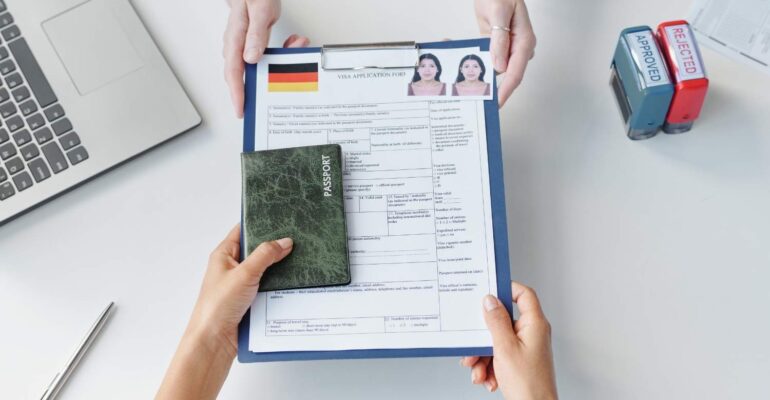
Knowing the Visa Sponsorship Process: An All-Inclusive Handbook
Although navigating the visa sponsorship procedure can be intimidating, knowing the main components will help you to find it far more doable. Visa sponsorship is a vital first step in the road regardless of your position—that of a family member trying to see loved ones, a student looking for educational possibilities overseas, or an enterprise wishing to bring foreign talent on staff. We will go over in this blog visa sponsorship policies, who can sponsor your visa application, and how Visa Consultancy Services can help you through this intricate procedure. What is sponsorship of Visa? Visa sponsorship is the process whereby a qualified person or entity—such as an employer, university, or family member—supports the application of a foreign citizen to enter or remain in a country. The sponsor guarantees the visa applicant satisfies the criteria defined by immigration laws and regulations, therefore assuming legal liability for them. This support usually consists in furnishing required paperwork, proving financial support, and following particular visa requirements. Forms of Visa Sponsorship Employment-Based Sponsorships Employment-based immigrant visas for priority workers, professionals with advanced degrees, skilled workers, and other workers2. Family-Based Sponsorship L-1 Visa for intracompany transfer Family Preference Visas: Subject to numerical restrictions, for spouses, children, and parents of U.S. citizens as well as more distant relatives of U.S. citizens and lawful permanent residents.2. Sponsorship Driven by Education F-1 Visa: For academic students registered in authorized universities2. J-1 Visa: For those engaged in educational and cultural interchange programs abroad2. Who might sponsor your Visa Application? Employers Work visas for foreign citizens can be sponsored by companies to cover particular job roles. This entails proving that the post cannot be filled by a local worker3 by petitioning the pertinent immigration authorities. Family Members Families including parents, spouses, and children can sponsor visas for their family to accompany them in the host nation. Usually, this calls for confirming the family tie and fulfilling financial assistance needs.1. Educational Institutions Students visas for overseas students can be sponsored by accredited educational institutions. This entails writing an acceptance letter and making sure the student satisfies both academic and financial criteria.2. Non-Governmental Organizations and Government Some government and non-governmental entities can sponsor visas for particular uses, like research, humanitarian projects, or cultural interchange programs.2. The Visa Sponsorship Procedure Find Out Your Eligibility Finding whether the applicant and sponsor fit the eligibility requirements for the particular visa category comes first. This include confirming the sponsor satisfies legal and financial criteria as well as checking the link between the application and the sponsor.One should compile necessary documentation. The applicant and the sponsor have to compile the necessary supporting records. This could call for acceptance letters, financial statements, job contracts, evidence of relationship, and other pertinent records.1. Ask the Petition. The sponsor petitions the pertinent immigration authorities. Along with any relevant payments, this petition comprises all required paperwork and papers.3. Review of Applied Materials Reviewing the petition, immigration authorities may ask for more documentation or information. Depending on the visa type and country3, this stage may take many weeks to months. Attend an interview. Occasionally the applicant would have to show up for an interview at an embassy or consulate. This interview gives a chance to confirm the details on the application and evaluate the applicant’s eligibility3. Get the Visa Decision. The immigration officials will decide once the application is under examination. Should approval, the applicant will get a visa enabling their entrance or stay into the host nation. Should denial be denied, the applicant might be able to appeal the ruling or reapply armed with further data3. Typical Visa Sponsorship Issues Satisfying Financial Needs Sponsors have to show they have enough money to help the candidate. For family-based sponsorships specifically, this can be difficult.1. Verifying Relationship Proof of the relationship between the sponsor and the applicant is absolutely vital for family-based visas. Often this calls for a lot of paperwork, including marriage certificates, birth certificates, and affidavits.1. Dealing with Legal Requirements Immigration laws and rules can differ by nation and be complicated. A good visa application depends on one understanding and compliance with these criteria.1. Processing Delays High demand, administrative backlogs, or extra security inspections might cause delays processing Visa applications.3. Finish: How Visa Consultancy Services Might be of Use? While negotiating the visa sponsorship procedure might be taxing, you are not alone in this regard. Our specialty at [Your Company Name] is offering professional direction and assistance all through the visa application procedure. Our seasoned consultants can assist you: Find out if your sponsor and you satisfy the requirements for the particular visa type. Get and arrange all necessary documentation so that the application is exact and whole. Help you to fill out and submit your visa petition—online or on paper. Prepare for an interview by Give advice and run practice sessions to get ready for the visa interview. Follow-Up: Track the development of your application and answer immigration officials’ queries. Our all-encompassing services will help you avoid the typical mistakes connected with the sponsorship procedure and raise your chances of a successful visa application. Get in touch now to find out more about how we might help you throughout your visa application process. Knowing the visa sponsorship process and consulting experts will help you confidently negotiate this challenging road. A strong visa application depends on proper sponsorship, hence with the correct support you can reach your travel and immigration objectives.
16 Oct

Knowing the Various Canadian Visas: Your All-Inclusive Handbook
For those wishing to visit, study, work, or move permanently, Canada presents a country of possibilities with a wide spectrum of visa choices. Although navigating the several visa categories can be challenging, this article will enable you to grasp the several Canadian visas offered and how Visa Consultancy Services might support you during the application process. Various kinds of Canadian Visas Canada grants multiple visa types to meet various needs and uses. The primary forms are broken out here: Visitor Passes For those visiting Canada for travel, family visits, or quick business trips—a tourist visa (V-1) Usually lasting up to six months, this visa lets parents and grandparents of Canadian citizens or permanent residents numerous entries1. It lets visitors stay for up to two years, per visit1. Study permits Students Visa (S-1): For those registered in a Canadian approved learning institution (DLI). Business and Investment Visas; Temporary Study Visa (SX-1) for short-term courses spanning less than six months1. Study and Work Part-Time Visas Start-Up Visa: For Canadian entrepreneurs with creative ideas backed by specific companies in Canada1. Self-Employed Visa: For those intending to be self-employed in Canada who have pertinent background in sports or cultural events Applying for a Canadian Visa: The type of visa you are seeking for will affect the application procedure for Canadian visas. These are the broad guidelines: Calculate Your Eligibility See the particular criteria for the visa type you are considering. Collect the necessary paperwork. Common paperwork include police certificates, proof of income, a current passport, and findings from a medical checkup. Finish the Application Forms. Accurately complete the relevant paperwork. Most visas let you apply online using the Immigration, Refugees and Citizenship Canada (IRCC) website1. Pay the application fee; the kind of visa will affect the fees. Verify you pay the right amount to prevent delays. You might have to send fingerprints and a picture to a designated biometric collecting centre. Attend an interview: Certain visa types could call for an interview conducted at a Canadian consulate or embassy. Variations in visa type and application volume affect processing timelines. Consult the IRCC website for present processing times. Advice for a Presenting Successful Application Review your forms twice-checked. Make sure everything is complete and accurate. Sort your paperwork. Maintain all necessary records easily available and in order. Remain updated: Keep current with any updates to immigration policies and practices. See a professional to help you through the application procedure; think about using a visa consulting service. How Visa Consultancy Services Might Benefit You? Although negotiating the Canadian visa application procedure might be difficult, Visa Consultancy Services is here to help. Our knowledgeable staff provides complete assistance with: We assist you in deciding which visa category best fits your circumstances by means of eligibility assessment. Help in compiling and arranging the needed records. Expert assistance helps one to complete and submit all required forms. Guidelines on what to anticipate and how to get ready for your interview. Constant support during the application process will help to answer any queries or worries. Finally,First step toward realizing your ambition of visiting, learning, working, or living in Canada is knowing the several Canadian visas. Although the procedure can be difficult, having the correct knowledge and assistance can help you to control it. Dedicated to assist you at every stage of the application procedure and guarantee a seamless process, Visa Consultancy Services is Call Visa Consultancy Services right now for further information or to begin your application for a Canadian visa. Let’s enable you to realize your Canadian dream.
16 Oct

Knowing the Many UK Visas
While navigating the world of UK visas might be challenging, knowing the several choices at hand will help the process go lot more smoothly. There is a particular visa designed for your situation whether your intended travel is business, leisure, study, or family trip to the UK. This blog will go over the several UK visas, their requirements, and how Visa Consultancy Services could help you on this path. Tourist and Short Stay Visas Standard Visitor Visa: Those wishing to visit the UK for leisure, business, or private medical treatment should apply this visa. It lets you remain for up to six months. You have to show that you will depart the UK at the end of your stay and that you can help yourself throughout. This visa is for you should you intend to register a civil partnership in the UK or get married here. It also enables a six-month stay at least. Perfect for people heading to the UK for an internal company move is the Global Business Mobility Visa. This visa needs employer sponsorship and supports temporary business activity. Designed for overseas students hoping to remain and work in the UK for up to two years following course completion, graduate visas are This visa does not call for a job offer. 3. Visas for Study Students Visa: For individuals sixteen years of age or above who have been accepted onto a course run by a recognised university. You have to demonstrate your financial capacity to help yourself as well as your command of English. Children aged 4 to 17 who want to attend an independent school in the UK can apply for a Child Student Visa. This visa calls for evidence of a place at a university and enough money to pay living expenses and course fees. 4. Visas for Family Travel Apply for a family visa if you wish to reside with a relative in the UK for longer than six months. This covers passports for parents, siblings, partners, children, and other relatives. 5. Parent of a Child Student Visa: For those wishing to travel with their child attending an independent UK university. This visa lets you remain for the whole course of your child’s attendance. 6. Other Visas Transit Visa: For people heading from the UK to another nation. Usually lasting 48 hours, this visa. Refugee Visa: For those applying for asylum in the UK from persecution back home. While your application is handled, this visa lets you remain in the UK. In conclusion Although negotiating the UK visa system might be intimidating, knowing the several kinds of visas that are offered will enable you to select the appropriate one for your requirements. Our area of expertise at Visa Consultancy Services is helping you through this complicated process to guarantee a thorough and accurate application. Our knowledge will save you time and help you to minimize the stress related to visa applications, therefore smoothing your path to the UK. Get in touch Visa Consultancy Services now for individualised help and to find out more about how we could contribute. Allow us to be your reliable partner in reaching your immigration and travel targets from the UK.
16 Oct
Knowing Multiple Australian Visas
Travelers, students, laborers, and immigrants frequent Australia—known for its breathtaking scenery, energetic towns, and varied culture—because of its Still, negotiating the several visas accessible for travel to Australia can be challenging. This blog seeks to offer a thorough guide to the several Australian visas, therefore enabling you to choose which best fits your requirements. Visitor Visa 1: Subclass 600 Designed for visitors, business guests, or those seeing relatives and friends, the Visitor Visa (Subclass 600) Depending on your situation, it lets you remain in Australia for up to twelve months. Among the numerous streams this visa grants are the Tourist Stream, Business Visitor Stream, and Sponsored Family Stream. Student visas Student Visa (Class 500) International students may study full-time at an eligible Australian university using the Student Visa (Subclass 500). This visa is valid for the course plus an extra time based on its length. It also allows few working hours during the course of study. 2. Subclass 590 Student Guardian Visa Parents or guardians looking to remain in Australia to look after a student under the age of eighteen are eligible for the Student Guardian Visa (Subclass 590). The guardian’s visa lets them remain in Australia for the same period as the student visa holder. Family Visas 1. Partner Visa (eight different classes, 820 and 801) The Partner Visa lets an Australian citizen, permanent resident, or qualified New Zealand national live in Australia alongside their spouse or de facto partner. Two steps comprise the visa application: temporary (Subclass 820) and permanent (Subclass 801). 2. Parent Visa—Subclasses 103 and 143 Parents of Australian citizens, permanent residents, or qualified New Zealand citizens may live in Australia using the Parent Visa. Each of the numerous parent visas—the Contributory Parent Visa (Subclass 143) and the Parent Visa (Subclass 103)—has varying processing times and fees. Visas for Business and Investment 1. Subclass 188 Business Innovation and Investment Visa Designed for those wishing to invest in an Australian state or territory or own and run a new or existing company in Australia, the Business Innovation and Investment Visa (Subclass 188) Among the numerous streams this visa grants are the Business Innovation Stream, Investor Stream, and Significant Investor Stream. Subclass 132: Business Talent Visa Those with a proven background of successful business ownership or investment are eligible for the permanent Business Talent Visa (Subclass 132). Two streams run under this visa: Venture Capital Entrepreneur Stream and Significant Business History Stream. Humanitarian and Refugee Visas Refugee Visa (Subclass 200) Those under persecution in their native country and requiring resettlement in Australia are eligible for the Refugee Visa (Subclass 200). You may permanently reside, work, and study in Australia with this visa. 2. Global Subclass 202 Special Humanitarian Visa Those subject to significant prejudice and violations of human rights in their native country are eligible for the Global Special Humanitarian Visa (Subclass 202). You may permanently reside, work, and study in Australia with this visa. In summary Although navigating the several Australian visa alternatives can be difficult, knowing the several kinds of visas that are offered will enable you to select the appropriate one for your situation. There is a visa that fits your circumstances whether your stay is for a brief vacation, education, employment, or planned permanent relocation. Our goal at Visa Consultancy Services is to assist you through the complex application for an Australian visa process. Our seasoned advisors guarantee that your application is correct and comprehensive by offering individualized direction and help. Get in touch right now to find out how we might help with your Australian visa application.
16 Oct

Japanese Visa Policies: Understanding the Regulations
Japan is a fascinating destination, known for its rich culture, advanced technology, and beautiful landscapes. Whether you’re planning to visit, study, work, or settle in Japan, understanding the visa policies and application processes is crucial. This blog provides insights into Japanese visa policies and how visa consultancy services can assist you in navigating this complex process. Types of Japanese Visas Japan offers a variety of visa categories tailored to different purposes. The main types include: Tourist Visa: For short stays up to 90 days for tourism, business, or visiting friends and relatives 2. Visa Waiver Program Japan has a Visa Waiver Program that allows citizens of certain countries to travel to Japan for up to 90 days without obtaining a visa. Application Process The visa application process involves several steps: Determine the Visa Type: Identify the appropriate visa category based on your purpose of travel. Complete the Application: Fill out the relevant application form online or in print. Required Documentation The documentation required for a Japanese visa application varies by visa type but generally includes: Valid Passport: Must be valid for at least six months beyond your intended stay. Application Form: Completed and signed application form. Photographs: Recent passport-sized photos. Proof of Financial Means: Evidence of sufficient funds to cover your stay. Travel Insurance: Valid travel insurance covering medical expenses. Health and Character Requirements Japan has specific health and character requirements for visa applicants: Health Requirements: Some visa types may require a medical examination. Conclusion Visa consultancy services play a crucial role in simplifying the complex process of obtaining a Japanese visa. By offering expert advice, thorough document review, and personalized support, these services can significantly enhance your chances of a successful visa application. Whether you’re a student, professional, or tourist, partnering with a reputable visa consultancy can turn your Japanese dreams into reality. Embark on your journey to Japan with confidence, knowing that expert guidance is just a consultation away. Feel free to reach out to us for more information or to schedule a consultation. Your global adventure starts here!
16 Oct

How Visa Consultants Can Support You
Although applying for a visa might be taxing, visa advisors are here to help. They can help you at every stage, here’s how. 1. Professional direction Visa advisors are quite familiar with visa rules and requirements. They can guarantee you satisfy all requirements by offering professional guidance on the kind of visa you require and the documentation needed. 2. Documentation Creation Getting and arranging the required paperwork for a visa application can be among the most difficult tasks involved. By helping you gather, check, and ready the necessary paperwork, consultants help to lower your risk of mistakes and omissions. 3. Help in Applications Completing visa application forms can take time and be challenging. Consultants help you to precisely complete these forms, thereby guaranteeing that all the information is current and accurate. 4. Getting Ready for Interview Should the application for your visa call for an interview, advisers can assist in preparation. They offer advice on what to expect, how to boldly respond to queries, and what records to pack. 5. Follow-up and revisions Applications for visas sometimes call for further information and follow-up. Consultants check your application process, speak with consulates or embassies on your behalf, and provide updates on any further needs. 6. Solving of Problems Should problems develop throughout the application procedure, consultants can assist in their resolution. Having dealt with typical issues, they may offer answers to keep your application under control. In summary Simplifying the visa application procedure depends mostly on Visa experts. Our goal at Visa Consultancy Services is to give you all-encompassing help to guarantee successful application. From first consultation to final approval, our staff of seasoned experts is ready to walk you through every stage. Get in touch now to get additional tailored help and let us ensure your visa application process runs as seamless as it could. Please get in touch if you require any more advice or help!